
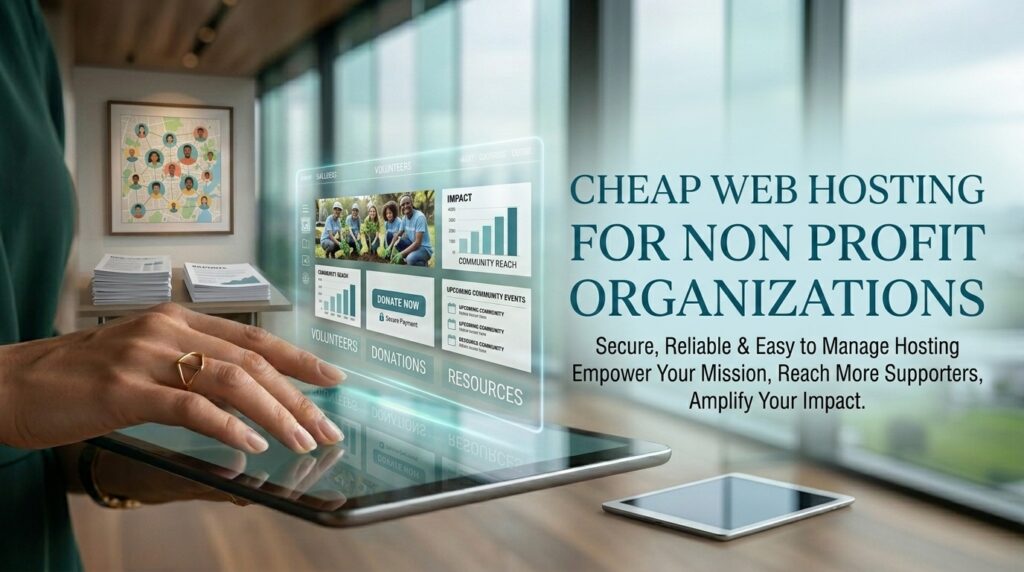
What is the cheap web hosting for non profit organizations? For charitable organizations, community foundations, and advocacy groups operating across major hubs like Texas, New York, California, Washington, and San Francisco, every dollar saved directly impacts mission-critical programs. Whether you are launching a grassroots campaign or managing a large public-facing charity, your website serves as your primary hub for community outreach, volunteer coordination, and secure online donations.
However, non-profits frequently struggle with tight operational budgets. Finding a web hosting provider that balances extreme affordability with enterprise-grade reliability, data security, and high Google SEO performance can feel like an uphill battle.
This comprehensive guide breaks down the best cheap and free web hosting solutions for non-profits, essential features to look for, and actionable strategies to maximize your search visibility without draining your financial resources.
1. Why Non-Profit Organizations Need Specialized Hosting Considerations
Charity and community websites face unique demands that distinguish them from standard corporate sites or e-commerce storefronts:
- Strict Budgetary Constraints: Non-profits must keep overhead low to satisfy watchdog groups and donors. Every dollar spent on bloated software licenses or expensive hosting tiers is a dollar taken away from your core cause.
- Traffic Spikes During Campaigns: Annual fundraisers, end-of-year giving pushes, and viral community initiatives can trigger massive, sudden surges in web traffic. Your hosting infrastructure must handle these spikes without crashing.
- Donor Data Security and Compliance: Donors trust your organization with sensitive credit card details, banking records, and personal information. Free or ultra-cheap hosting must still include robust SSL encryption and malware protection.
- Google SEO and Local Search Visibility: To attract local volunteers, grant sponsors, and donors in competitive regions like New York, Los Angeles, or Seattle, your site must rank high on Google search result pages. Slow, unreliable hosting destroys your SEO rankings.
2. Special Non-Profit Hosting Discounts and Free Programs
Before settling on a standard budget plan, check if your organization qualifies for institutional non-profit programs. Major tech companies and hosting providers offer steep discounts or even free tiers to verified 501(c)(3) organizations:
- DreamHost Non-Profit Program: DreamHost offers free shared hosting to verified US-based 501(c)(3) organizations. This program provides the same core features as their standard paid tiers without forcing you to display third-party advertisements.
- InterServer Non-Profit Hosting: InterServer provides its standard, feature-rich web hosting plan entirely free for US-based non-profit organizations, provided the site meets simple community guidelines or features a standard footer link.
- TechSoup Partnerships: Platforms like Wix offer deep, exclusive subscription discounts (up to 70% off) through TechSoup, the premier technology resource hub for charities and libraries.
- Kinsta Non-Profit Discounts: For larger non-profits requiring high-end managed WordPress cloud infrastructure, Kinsta offers a 15% discount and two free months on annual plans.
3. Top Cheap Web Hosting Providers for Non-Profits
If you do not qualify for a completely free hosting tier or need broader global scalability, several budget-friendly providers deliver exceptional value:
A. Hostinger (Best Overall Value for Low-Cost Hosting)
Hostinger is widely recognized as the king of budget web hosting, combining rock-bottom pricing with modern control panels and reliable uptime.
- Why it shines for Non-Profits: Plans start at extremely low monthly rates and include robust features like a free custom domain name for the first year, automated weekly or daily backups, integrated SSL certificates, and intuitive AI-powered site-building tools.
- Best For: Small to mid-sized non-profits looking for a fast, hassle-free launch on a minimal budget.
- Pricing: Introductory shared plans start around $2.69/month.
B. Bluehost (Best Beginner-Friendly WordPress Integration)
Officially recommended by WordPress.org, Bluehost powers millions of websites worldwide and offers stellar introductory pricing.
- Why it shines for Non-Profits: Bluehost provides a seamless one-click WordPress installer, unmetered bandwidth, free SSL security, and reliable 24/7 customer support—critical when non-profit staff members wear multiple hats and need quick technical help.
- Best For: Grassroots organizations building their first WordPress-powered community blog and donation hub.
- Pricing: Introductory rates start around $1.99 to $2.99/month.
C. GreenGeeks (Best Eco-Conscious Budget Hosting)
If your non-profit centers around environmental advocacy, sustainability, or community health, GreenGeeks matches your organizational values while keeping costs low.
- Why it shines for Non-Profits: GreenGeeks matches 300% of the energy consumed by their data centers with renewable energy credits. Their hosting plans include built-in caching, free CDN integration, and daily automated backups.
- Best For: Eco-friendly non-profits wanting reliable performance paired with a green corporate footprint.
- Pricing: Budget plans start around $2.95/month.
D. SiteGround (Best for High-Traffic Public Advocacy Portals)
While slightly more expensive than basic shared hosts, SiteGround is famous for elite speeds and high-end security.
- Why it shines for Non-Profits: Powered by Google Cloud infrastructure, SiteGround offers superior handling of traffic surges during major public fundraising drives. Their staging tools and built-in caching layers ensure your site stays lightning-fast.
- Best For: Established non-profits anticipating rapid community growth and high visitor volumes.
- Pricing: Introductory plans start around $2.99/month.
4. Essential Features to Look for in Cheap Non-Profit Hosting
When evaluating budget hosts, do not compromise on these non-negotiable features:
- Free SSL Certificates: An SSL certificate (HTTPS) is mandatory. Without it, browsers flag your site as “Not Secure,” instantly destroying donor trust and tanking your Google rankings.
- Automated Daily Backups: Human error, botched software updates, or malicious attacks can wipe out your site data. Ensure your host provides automated daily backups with easy one-click restoration.
- Scalability: Your organization may start small, but as local awareness grows, your web traffic will increase. Ensure your host allows seamless upgrades to higher bandwidth and RAM tiers.
- Reliable Uptime Guarantees: Look for hosts offering a minimum of 99.9% verified uptime so your donors and volunteers can access your resources around the clock.
5. Masterclass: Maximizing Google SEO on a Budget
Ranking high in competitive metropolitan search markets like San Francisco, Austin, or New York requires a precise SEO strategy that leverages free or low-cost tools:
Local SEO for Community Impact
Optimize your non-profit website for local search terms (e.g., “Volunteer opportunities in downtown Seattle” or “Youth mentoring programs in Austin Texas”). Claim and optimize a free Google Business Profile to capture local search traffic directly from map results.
Content Marketing and Grant-Funded Storytelling
Publish regular blog posts, impact reports, and community success stories. Use targeted keywords related to your cause so that philanthropic donors searching for specific charitable initiatives find your organization organically.
Leveraging Google Grants ($10,000/Month Free Ads)
While not strictly organic SEO, registered non-profits should apply for the Google Ad Grants program, which provides eligible organizations with up to $10,000 per month in in-kind search advertising. Pair this with a fast, cheap hosting provider to drive high-intent visitor traffic instantly.
Core Web Vitals Optimization
Even on budget hosting, you can maintain fast page speeds by compressing images, implementing free Cloudflare CDN services, and avoiding bloated WordPress plugins. Google rewards fast, lightweight sites with higher organic search rankings.
6. Frequently Asked Questions (FAQ)
1. Can verified non-profit organizations really get web hosting for free?
Yes. Reputable providers like DreamHost and InterServer offer full shared hosting plans completely free of charge to verified 501(c)(3) non-profit organizations, subject to application approval and basic compliance.
2. Are cheap web hosting plans secure enough for processing donations?
Yes, provided the host includes a free SSL certificate, secure file transfer protocols (SFTP), and a web application firewall (WAF). However, for payment processing, it is always safest to embed secure third-party donation widgets (such as Zeffy, Stripe, or PayPal) rather than storing credit card data directly on your server.
3. What is the catch with ultra-cheap $2/month web hosting plans?
Introductory rates usually require committing to a multi-year term upfront (such as 1 or 3 years), and renewal rates will revert to standard pricing after the initial term expires. Always read the fine print regarding renewal costs.
4. Do I need technical coding skills to manage a budget non-profit website?
No. Most budget hosts featured in this guide offer one-click WordPress installers and intuitive drag-and-drop website builders (like Elementor or SitePad), allowing volunteers with zero coding experience to build and manage pages easily.
5. How does web hosting affect my non-profit’s Google search rankings?
Google evaluates user experience metrics like page load speed and site stability. If cheap hosting causes your site to load slowly, users will bounce back to search results, signaling to Google that your page offers a poor experience, resulting in lower search visibility.
6. Can I use TechSoup to get discounts on web hosting and domain services?
Yes. TechSoup partners with major tech companies like Wix to offer deep, exclusive subscription discounts (up to 70% off) specifically tailored for registered charities and community libraries.
7. How much storage space does a typical non-profit website need?
A standard informational non-profit site with a blog, donation page, and team roster typically requires less than 10GB of storage. Unless you are hosting thousands of high-definition video archives, basic budget storage tiers are more than sufficient.
8. Should I use WordPress or an all-in-one builder like Wix for my non-profit?
If you want total control over your SEO, custom donation plugins, and zero platform lock-in, WordPress paired with budget hosting is ideal. If you want a simpler, out-of-the-box editor with built-in templates, a discounted builder like Wix via TechSoup is a great alternative.
9. What should I do if my non-profit website experiences a sudden traffic spike?
If you launch a major news campaign or viral fundraiser, make sure your hosting plan allows instant resource scaling. Using a free Content Delivery Network (CDN) like Cloudflare will also absorb traffic load by caching static pages across global edge servers.
10. How often should my non-profit website be backed up?
Your hosting provider should perform automated daily backups alongside real-time database redundancy. This ensures that if a plugin update fails or content is accidentally deleted, you can restore your entire site with a single click.
7. Conclusion
Selecting the right web hosting provider allows your non-profit to maximize its operational budget while maintaining a professional, secure digital presence. Whether you secure free hosting through DreamHost or InterServer, leverage non-profit software discounts via TechSoup, or choose an ultra-affordable plan with Hostinger or Bluehost, prioritizing speed, security, and SEO will help your organization reach more donors, recruit volunteers, and amplify your community impact online.