

When starting a digital venture—whether launching an e-commerce brand in New York, a technology startup in San Francisco, a local service business in Austin (Texas), a creative agency in Los Angeles (California), or a software consultancy in Seattle (Washington)—keeping initial operational costs low is critical.
Few brands are as instantly recognizable as GoDaddy. As the undisputed heavyweight champion of domain registration and web hosting, GoDaddy attracts millions of users with headline-grabbing introductory rates. You can often secure web hosting for as low as $4.99 per month or a .com domain for a nominal fee during your first checkout.
However, thousands of webmasters experience sticker shock when their billing cycle rolls over. Known widely across the web hosting community as the “GoDaddy Renewal Price Trap,” this pricing model relies on steep cost increases after the initial introductory term ends.
This exhaustive, data-driven audit explains how the GoDaddy renewal trap works, why it catches users off guard, how it impacts your bottom line, and how you can avoid paying inflated costs.
1. Anatomy of the Trap: Introductory vs. Renewal Rates
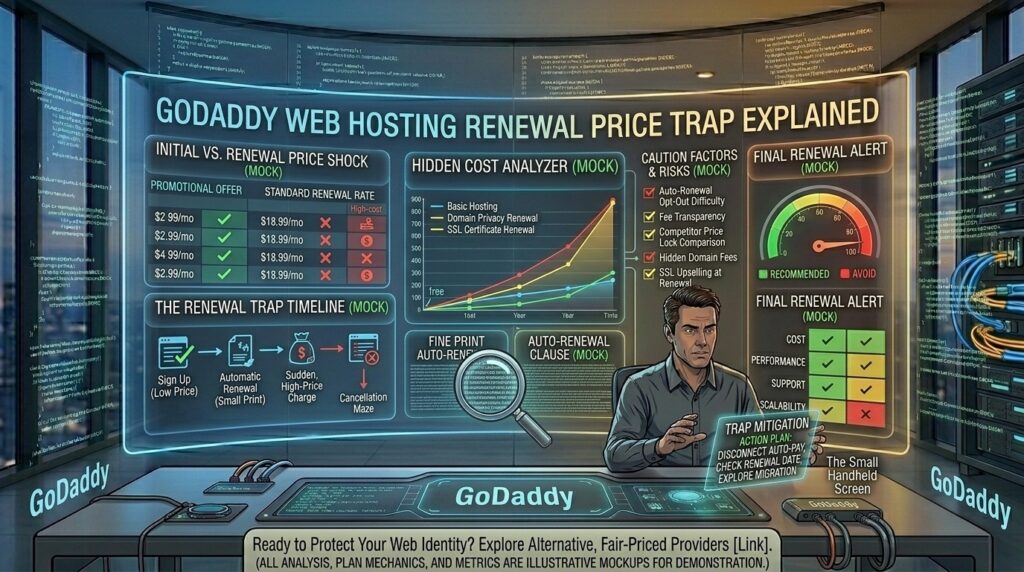
The core mechanism of GoDaddy’s pricing strategy is a sharp bifurcation between promotional acquisition pricing and standard renewal pricing. To understand why bills suddenly double or triple, you need to look at how hosting tiers and terms are structured.
+-----------------------------------------------------------------------+
|                 GODADDY RENEWAL PRICE COMPARISON                      |
+-----------------------------------------------------------------------+
| Hosting Plan        | Promotional Rate (1st Term) | Standard Renewal  |
+---------------------+-----------------------------+-------------------+
| Economy Shared      | ~$4.99 / mo   | ~$11.99 / mo|
| WordPress Basic     | ~$4.99 / mo   | ~$14.99 / mo|
| Deluxe Shared       | ~$7.99 / mo   | ~$16.99 / mo|
| Ultimate Shared     | ~$12.99 / mo  | ~$21.99 / mo|
+-----------------------------------------------------------------------+
The Multi-Year Commitment Hook
- The Term Play: To get those headline-low monthly figures (such as $4.99/mo), GoDaddy typically requires you to purchase a 36-month upfront commitment.
- The Catch: While you enjoy the low rate for the first three years, the moment your account enters year four (the renewal phase), the billing shifts to the standard, non-discounted monthly or annual rate—frequently resulting in a 100% to 200% price increase overnight.
2. Hidden Add-Ons and Subsidiary Cost Traps
The renewal shock is rarely limited to web hosting alone. GoDaddy’s checkout interface is famously saturated with pre-checked, optional add-ons that compound year-over-year billing inflation:
- Domain Privacy & Protection: While basic WHOIS privacy is standard on many modern platforms, GoDaddy has historically monetized enhanced domain security tiers. If you opted for automated security protections, they renew at full retail value.
- Professional Email (Microsoft 365): Introductory email tiers start cheaply (around $1.99/mailbox/month), but jump significantly upon renewal, adding unexpected weight to small business operating expenses.
- Automated SSL Certificates: While higher-tier WordPress packages bundle SSL, standalone plans require separate certificates that renew as recurring yearly line items.
3. Real User Experiences: The Auto-Renewal Dilemma
A recurring pain point across independent web developer forums, Trustpilot, and Reddit communities centers around GoDaddy’s automated billing behavior.
+-----------------------------------------------------------------------+
|                    THE AUTO-RENEWAL CYCLE                             |
+-----------------------------------------------------------------------+
| 1. Silent Charging: Auto-renewals trigger automatically days before   |
|    the actual contract expiration using stored credit card data.      |
| 2. Refund Friction: Strict refund windows (often 7 days for annual    |
|    plans or zero refunds for renewals) make recovering funds hard.     |
| 3. Customer Service Friction: Retention specialists use structured    |
|    scripts to upsell or block instant cancellations over the phone.   |
+-----------------------------------------------------------------------+
Users frequently report logging into their accounts after a surprise bank notification to find that a hosting package or unused domain auto-renewed at the high standard rate. Navigating the cancellation dashboard or requesting a retroactive refund can lead to administrative friction.
4. Impact on Small Business Budgets and SEO Continuity
How does falling into the renewal price trap affect your business operations across competitive digital ecosystems like New York, San Francisco, or Austin?
- Budget Distortion: Small business owners allocate tight yearly marketing and IT budgets. An unexpected $200–$400 spike in hosting and domain renewals throws off financial forecasting.
- The Panic Migration Risk: When business owners discover the steep renewal bill, they often panic-cancel their accounts without a proper migration plan. Rushing a website transfer away from GoDaddy under pressure can cause prolonged downtime, broken database connections, and lost
5xxerror spikes that damage your hard-earned Google search rankings.
5. Strategic Playbook: How to Beat the GoDaddy Renewal Trap
You don’t have to abandon GoDaddy entirely if you like their ecosystem, but you must manage your account proactively. Apply these expert strategies to neutralize the price hike:
+-----------------------------------------------------------------------+
|                     DEFENSIVE MITIGATION STEPS                        |
+-----------------------------------------------------------------------+
| 1. Turn Off Auto-Renew: Set calendar reminders 30 days before contract|
|    expiration to manually audit your services.                        |
| 2. Negotiate at Renewal: Call support or use live chat; retention     |
|    agents are often authorized to apply loyalty discounts.            |
| 3. Audit Your Portfolio: Use the "Renewal Price" column inside your   |
|    GoDaddy dashboard to track exact future costs.       |
| 4. Compare Alternatives: Evaluate transparently priced hosts (like    |
|    Hostinger or IONOS) if renewal quotes exceed market value.         |
+-----------------------------------------------------------------------+
6. Frequently Asked Questions (FAQ)
1. What is the GoDaddy renewal price trap?
It refers to the sharp, unexpected price increase that occurs when GoDaddy’s heavily discounted introductory hosting or domain terms expire and automatically renew at standard, non-promotional retail rates.
2. How much do GoDaddy hosting plans increase upon renewal?
Depending on the specific tier (Economy, Deluxe, or Ultimate) and contract length, renewal rates typically increase by 100% to over 150%, often shifting from promo rates around $4.99/mo up to regular rates of $11.99 to $16.99/mo or higher.
3. Can I negotiate a lower rate with GoDaddy support when my plan renews?
Yes. Many users successfully contact GoDaddy via live chat or phone support right before their renewal date and ask the retention department if any loyalty discounts or promotional coupon codes can be applied to lower the bill.
4. How can I check my exact upcoming renewal prices on GoDaddy?
Log into your GoDaddy account, navigate to your Domain Portfolio or My Products page, click the Columns icon, and check the box for Renewal Price to reveal the exact future cost of each asset.
5. Does GoDaddy automatically charge my credit card for renewals?
Yes. By default, GoDaddy enables auto-renewal for all hosting packages, domains, and security add-ons using the payment method saved on your account.
6. How do I turn off auto-renew on GoDaddy?
Go to your Renewals and Billing section in your GoDaddy account profile, check the items you wish to modify, and toggle the auto-renew status to “Off” to prevent surprise charges.
7. What is GoDaddy’s refund policy on renewals?
GoDaddy generally does not offer refunds for automatic renewals of hosting plans or domain names once the billing cycle has begun, making proactive cancellation essential.
8. Are domain names also subject to the renewal price jump?
Yes. Domains registered for pennies or low promotional rates in year one typically renew at standard rates (often exceeding $20+ per year for .com extensions).
9. Is it difficult to transfer my domain and website away from GoDaddy?
No. While GoDaddy places standard locks on domains for security, transferring a domain out requires unlocking it, getting an authorization (EPP) code, and initiating the transfer with a new registrar.
10. Are there web hosts with more transparent renewal pricing?
Yes. Many alternative hosting providers maintain more predictable pricing models or smaller gaps between introductory and renewal rates, making them attractive options for budget-conscious business owners.
7. Conclusion
The GoDaddy web hosting renewal price trap is an established reality of legacy hosting marketing models. While GoDaddy provides an all-in-one ecosystem and powerful domain search capabilities, failing to track your billing lifecycle can lead to aggressive financial surprises.