

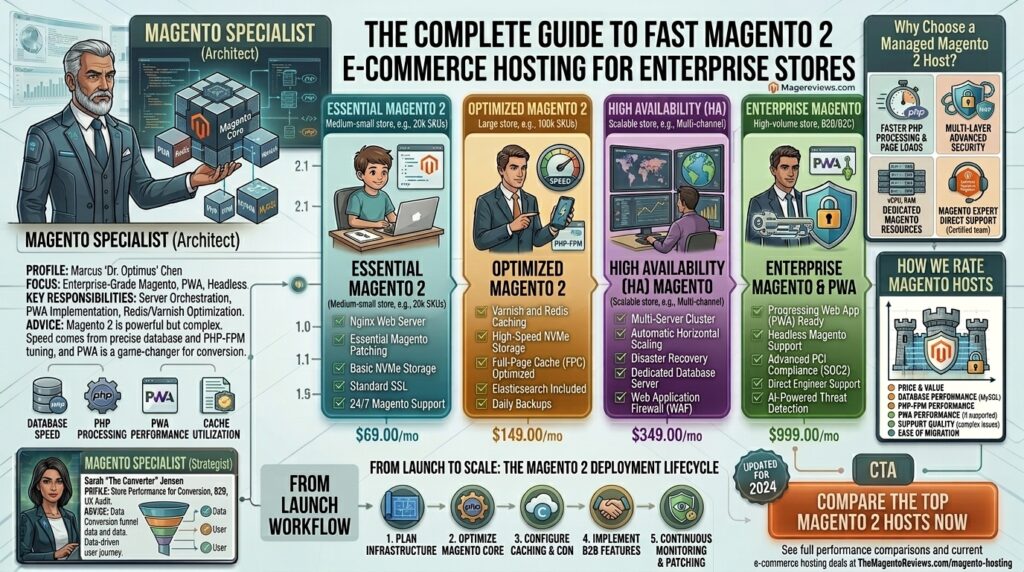
Fast web hosting for magento 2 e-commerce sites. Magento (Adobe Commerce) is globally recognized as one of the most powerful, modular, and enterprise-capable e-commerce frameworks on the market. However, this immense flexibility comes with a heavy footprint. Unlike lightweight content management systems, Magento 2 is a resource-hungry engine built for scale.
If your digital storefront is targeting high-value domestic and international markets—spanning major tech and commercial corridors from Texas and New York to California, Washington, and San Francisco—standard shared web hosting will cause your site to lag, time out, and bleed conversions.
This comprehensive guide breaks down everything you need to know about securing fast web hosting for Magento 2, optimizing your server stack, evaluating top providers, and future-proofing your online business.
Why Magento 2 Demands Specialized High-Performance Hosting
Magento 2 handles complex product catalogs, dynamic multi-currency pricing, heavy database queries, and sophisticated shopper filtering in real time. When traffic surges, generic hosting providers running standard Apache setups quickly run out of memory.
A high-performance Magento 2 hosting environment relies on a specialized technical architecture:
- Varnish Cache: The industry gold standard for serving full-page caches instantly to guest users without hitting PHP or MySQL.
- Redis or Valkey: In-memory data stores used for handling backend caching and session management efficiently.
- PHP-FPM with Nginx or LiteSpeed: Handles high concurrency requests significantly faster than legacy web servers.
- Elasticsearch / OpenSearch: Mandatory for fast, responsive catalog searches in Magento 2.4+.
- NVMe SSD Storage: Extreme input/output (I/O) read and write speeds to accelerate database calls.
Top Hosting Providers for High-Speed Magento 2 Stores
To consistently rank well on Google and maintain low bounce rates, your store needs infrastructure engineered for e-commerce velocity. These top-tier hosts deliver exceptional performance for Magento 2:
1. MGT-Commerce (Best Enterprise AWS-Powered Magento Hosting)
MGT-Commerce builds fully managed architectures directly on top of Amazon Web Services (AWS), utilizing cutting-edge Graviton processors, Varnish, and Redis.
- Why it shines for Magento: Guarantees sub-0.3-second load times with automated scaling and enterprise-grade security layers tailored strictly for Adobe Commerce and Magento 2.
- Pros: Incredible raw power, 24/7 proactive emergency response, and custom AWS optimization.
- Cons: Premium pricing tiers aimed at established, high-revenue merchants.
2. Cloudways (Best Managed Cloud Flexibility)
Cloudways provides a brilliant abstraction layer over premier infrastructure providers like DigitalOcean, Vultr, and AWS.
- Why it shines for Magento: Offers a 1-click Magento installer coupled with an advanced stack featuring pre-configured Varnish, Redis, Memcached, and HTTP/2 support. You can scale your server vertically instantly.
- Pros: Transparent pay-as-you-go pricing, staging environments, and complete control over server parameters.
- Cons: Requires basic familiarity with cloud server management.
3. Nexcess (Best Specialized Managed Magento Ecosystem)
Nexcess (by Liquid Web) focuses heavily on e-commerce, offering fully managed Magento hosting infrastructure equipped with built-in auto-scaling tools.
- Why it shines for Magento: Includes automated database maintenance, built-in image compression, and proactive monitoring by certified Magento experts.
- Pros: Predictable visitor-tier plans, free automated migrations, and exceptional customer support.
- Cons: Proprietary control panels have a minor learning curve for traditional cPanel users.
4. Hostinger VPS (Best Budget-Friendly High-Performance Option)
For growing stores operating on tighter capital, Hostinger’s high-performance VPS plans deliver impressive raw resources (NVMe storage, ample RAM, and multi-core CPUs).
- Why it shines for Magento: Provides root access to configure custom caching layers and PHP memory allocations precisely to Magento requirements without breaking the bank.
- Pros: Highly cost-effective entry pricing, intuitive custom panel, and robust hardware configurations.
- Cons: Requires manual optimization or third-party management for advanced caching configuration.
Actionable Tips to Optimize Magento 2 Speed
Even the most expensive cloud server will crawl if Magento’s internal configurations are bloated. Execute these foundational optimizations:
- Enable Varnish Cache for Full-Page Caching: Route all HTTP traffic through Varnish to serve cached pages in milliseconds, drastically dropping your Time to First Byte (TTFB).
- Run in Production Mode: Never run a live Magento store in developer mode. Production mode compiles dependency injection files and optimizes code execution paths.
- Implement Advanced JS/CSS Minification: Clean up your asset delivery by enabling template minification, JavaScript bundling, and CSS merging via the Magento Admin panel.
- Leverage a Global CDN: Use Cloudflare Enterprise or Fastly to cache static media, JavaScript files, and product imagery closer to your customers in California, New York, Texas, and worldwide.
- Clean Database Logs Regularly: Magento logs a massive amount of customer logs, visitor logs, and quote data. Set up automated cron jobs to purge old log tables and keep database queries lightweight.
10 Frequently Asked Questions (FAQs)
1. Why is standard shared hosting bad for Magento 2?
Shared hosting shares CPU, RAM, and disk I/O among hundreds of other websites. Magento 2 requires dedicated memory limits and specific PHP extensions that shared hosting environments cannot stably sustain.
2. What are the minimum server requirements for Magento 2?
Magento 2 requires PHP 8.2 or higher, at least 2GB to 4GB of RAM (depending on catalog size), MySQL/MariaDB database support, and an Elasticsearch or OpenSearch instance.
3. How does hosting impact my Google SEO rankings?
Google heavily evaluates Core Web Vitals—focusing on page load speed, visual stability, and interactivity. Fast hosting directly improves these metrics, lowering bounce rates and lifting organic search rankings.
4. Is Varnish Cache mandatory for Magento 2?
While not strictly mandatory to boot up the software, Varnish is practically essential for production stores handling more than a handful of concurrent users. It prevents the database from collapsing under heavy traffic.
5. What is the difference between Managed Cloud Hosting and Unmanaged VPS?
Managed cloud hosting (like Nexcess or Mgt-Commerce) handles server updates, security patches, backups, and performance tuning for you. Unmanaged VPS gives you raw server access, requiring you to manage security and administration manually.
6. Why does Magento 2 require Elasticsearch?
Starting with modern Magento releases, Elasticsearch (or OpenSearch) is required to power the catalog search backend quickly and efficiently across large product lines.
7. How do I handle traffic spikes during major holiday sales?
Choose a host that supports elastic vertical scaling or utilizes cloud autoscaling groups that can temporarily allocate extra CPU cores and RAM during peak shopping events.
8. Should I use Redis for session management?
Yes. Storing Magento sessions and caches in Redis (in-memory) is exponentially faster than writing session files directly to the disk file system.
9. How important is geographic server location?
Placing your server close to your target audience (e.g., data centers hosted on the US East or West Coast) reduces network latency and speeds up initial connection times.
10. What kind of budget should I expect for reliable Magento hosting?
Professional, high-performance managed Magento hosting typically starts around $50 to $150+ per month for growing stores, scaling upward based on traffic volume and resource allocation.
Conclusion
Selecting the right web host for a Magento 2 e-commerce site is a foundational business decision. By pairing a robust, performance-engineered cloud environment—such as Mgt-Commerce, Cloudways, or Nexcess—with disciplined internal optimizations, you ensure lightning-fast page speeds, airtight checkout security, and peak readiness for high-volume organic search traffic.