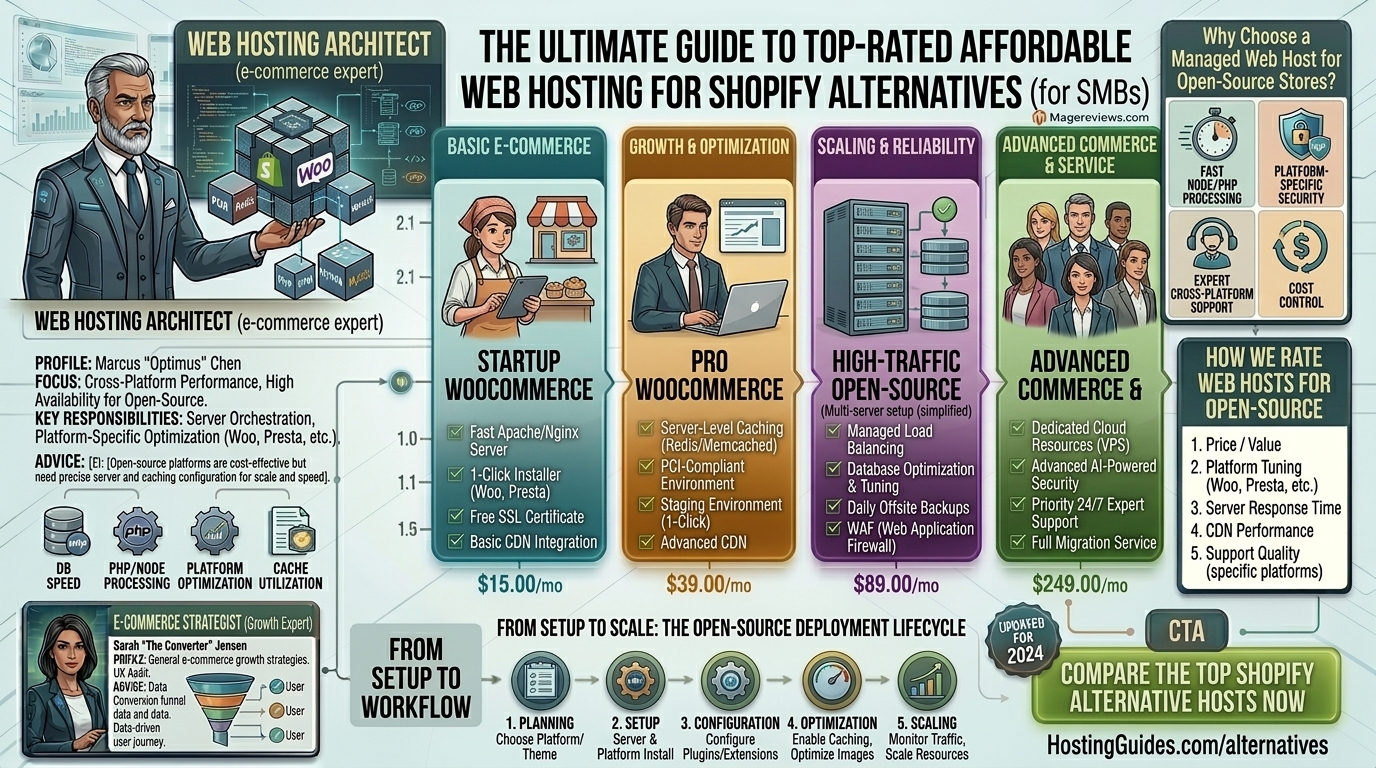
Shopify is an exceptional out-of-the-box e-commerce builder, but its monthly subscription tiers, mandatory transaction fees (unless using Shopify Payments), and expensive app store addons can quickly bleed a growing business dry.
For merchants migrating to cost-effective, self-hosted, or open-source Shopify alternatives—such as WooCommerce, PrestaShop, OpenCart, or Magento—finding affordable web hosting is the first critical milestone.
If your online venture serves or targets major commercial hotspots like Texas, New York, California, Washington, or San Francisco, you need a hosting provider that balances extreme budget-friendliness with uncompromising speed, reliability, and security.
This comprehensive guide breaks down the best cheap web hosting providers for alternative e-commerce platforms, key architectural choices, optimization tips, and 10 detailed FAQs.
Why Self-Hosted Shopify Alternatives Need Specialized Cheap Hosting
When moving away from fully managed Software-as-a-Service (SaaS) builders like Shopify, you take absolute ownership of your code, database, and file structures. While this eliminates arbitrary transaction fees and platform lock-in, it shifts the responsibility of performance onto your web host.
A reliable cheap hosting plan for an e-commerce alternative must feature:
- NVMe SSD Storage: Standard spinning disks or older SATA SSDs choke under database read/write cycles. NVMe storage accelerates catalog search and checkout transactions.
- LiteSpeed Web Servers or NGINX: Essential for handling concurrent visitor traffic seamlessly on a budget.
- Free SSL Certificates & Daily Backups: Crucial for encrypting customer credit card data and safeguarding your business against sudden data loss.
- One-Click Installers: Streamlined deployment tools for WordPress/WooCommerce and open-source shopping carts.
Top 5 Cheap Web Hosting Providers for E-Commerce Alternatives
Operating on a budget does not mean sacrificing performance. These hosting providers offer exceptional value, low entry-level costs, and robust architecture tailor-made for self-hosted e-commerce stores:
1. Hostinger (Best Overall Value & Cost Efficiency)
Hostinger has rapidly become a dominant market force by pairing ultra-low introductory rates with modern, high-performance infrastructure.
- Why it shines for e-commerce alternatives: Their business-tier shared and cloud plans utilize custom hPanel management, LiteSpeed web servers, and built-in object caching (Redis), making it ideal for lightweight WooCommerce and OpenCart stores.
- Pricing: Frequently starts around $2.99/month.
- Pros: Outstanding speed for the price, free domain, free SSL, and a very clean user interface.
- Cons: Heavy renewal rate increases after the initial introductory term expires.
2. Hosting.com / A2 Hosting (Best for High-Speed Developer Environments)
Formerly known as A2 Hosting, Hosting.com focuses intensely on raw server speed, offering turbo-boosted environments that load database-heavy carts in milliseconds.
- Why it shines for e-commerce alternatives: Their entry-level packages feature NVMe storage, LiteSpeed caching, and robust compatibility with multiple open-source shopping systems.
- Pricing: Introductory plans start as low as $2.00/month.
- Pros: Exceptional page loading speeds, anytime money-back guarantee, and developer-friendly tools (SSH, Git access).
- Cons: Higher-tier features require upgrading to more costly turbo plans.
3. SiteGround (Best for Reliable Managed Support & Security)
While slightly more expensive than bare-bones budget hosts, SiteGround falls into the affordable mid-range tier and is widely celebrated for its bulletproof reliability.
- Why it shines for e-commerce alternatives: Runs on Google Cloud infrastructure with custom performance plugins, automated daily backups, and proactive firewall protections designed to block malicious bot traffic attempting checkout fraud.
- Pricing: Introductory plans start around $3.95 to $5.95/month.
- Pros: Legendary customer support, free automated site migrations, and high stability.
- Cons: Strict resource caps on lower-tier plans; sharp renewal pricing.
4. DreamHost (Best Independently Owned Budget Host)
Endorsed officially by major open-source communities, DreamHost offers reliable, unthrottled storage options without corporate conglomerates dictating terms.
- Why it shines for e-commerce alternatives: Provides unlimited bandwidth on standard plans, free automated WordPress/WooCommerce migrations, and solid privacy protections.
- Pricing: Entry plans start around $2.59/month.
- Pros: 97-day money-back guarantee, solid uptime history, and free privacy protection.
- Cons: Custom control panel takes some getting used to if you are accustomed to traditional cPanel.
5. ScalaHosting (Best Affordable Transition to Cloud VPS)
If your store outgrows shared hosting but you cannot afford expensive enterprise solutions, ScalaHosting bridges the gap with managed cloud VPS at shared hosting prices.
- Why it shines for e-commerce alternatives: Their proprietary SPanel gives you dedicated cloud resources, isolated IP addresses, and enterprise-grade security without cPanel licensing fees.
- Pricing: Cloud plans start around $14.95/month.
- Pros: Full resource dedication, free website transfers, and advanced cybersecurity defense (SShield).
- Cons: Steeper learning curve for absolute beginners.
Actionable Tips to Maximize Performance on a Budget Host
When utilizing economical web hosting for an e-commerce store, every server resource counts. Implement these strategies to maintain high velocity:
- Leverage a Free CDN (Cloudflare): Route your DNS through Cloudflare’s free tier to cache static assets globally. This shields your cheap hosting server from unnecessary traffic loads originating from coast to coast (California to New York).
- Aggressively Compress Images: Bulky product images consume bandwidth and slow down page rendering. Use automated compression tools or plugins to convert assets to WebP formats.
- Minimize Active Plugins and Extensions: Every active module adds JavaScript and CSS requests. Keep your store lean by deleting unused plugins and extensions.
- Purge Database Transients: E-commerce databases accumulate junk files over time. Set up automated schedules to clear expired transients, abandoned cart sessions, and post revisions.
- Choose a Data Center Close to Your Market: If your core demographic resides in Texas, Washington, or the West Coast, select a hosting data center located on the US West or Central regions to minimize network latency.
10 Frequently Asked Questions (FAQs)
1. What is the primary difference between Shopify and self-hosted alternatives?
Shopify is an all-in-one hosted SaaS platform where you rent space and pay recurring platform fees. Self-hosted alternatives (like WooCommerce or OpenCart) give you full ownership of your software code and data, requiring you to purchase separate web hosting.
2. Can cheap web hosting safely handle real customer transactions?
Yes, provided the host includes free, auto-renewing SSL certificates (HTTPS) to encrypt sensitive checkout data and credit card information during transmission.
3. How much traffic can a cheap $3/month shared hosting plan handle?
Most cheap shared hosting plans comfortably handle up to 10,000 to 15,000 monthly visitors, provided the site is properly optimized with caching plugins and lightweight themes.
4. Will cheap hosting hurt my Google SEO rankings?
Not necessarily, if the host uses fast NVMe storage and LiteSpeed servers. However, if a cheap host suffers from frequent downtime or slow Time to First Byte (TTFB), Google’s Core Web Vitals assessment will penalize your search rankings.
5. Are free domain names included with cheap hosting plans?
Many budget hosts (such as Hostinger and Bluehost) include a free custom domain name for the first year when you purchase an annual or multi-year hosting subscription.
6. What happens when my e-commerce store outgrows cheap shared hosting?
When your visitor volume surges and database queries slow down, you can seamlessly upgrade your account to a cloud VPS or managed cloud hosting environment with the same provider.
7. Is cPanel mandatory for managing an e-commerce store?
No. Many modern budget hosts use custom control panels (like Hostinger’s hPanel or DreamHost’s panel) which are often cleaner and easier for beginners to navigate than legacy cPanel interfaces.
8. Why is object caching important for online stores?
Object caching stores complex database query results in temporary memory (RAM), preventing your store from repeatedly querying the database for identical catalog pages and checkout steps.
9. What is the catch with extremely low introductory hosting prices?
Introductory rates apply only to your initial signup term (e.g., 1 to 4 years). Renewal prices revert to standard rates, so always check the renewal cost before committing long-term.
10. How difficult is it to migrate an existing store to a cheap host?
Most reputable budget hosts offer free professional website migration services, transferring your files, database, and domain configurations safely with zero downtime.
Conclusion
Transitioning away from expensive SaaS builders to self-hosted e-commerce platforms is a smart financial move that grants you complete creative and structural freedom. By pairing an alternative platform like WooCommerce or OpenCart with a high-performance budget host—such as Hostinger, Hosting.com, or SiteGround—you can run a lightning-fast, secure, and profitable online store without draining your capital.